

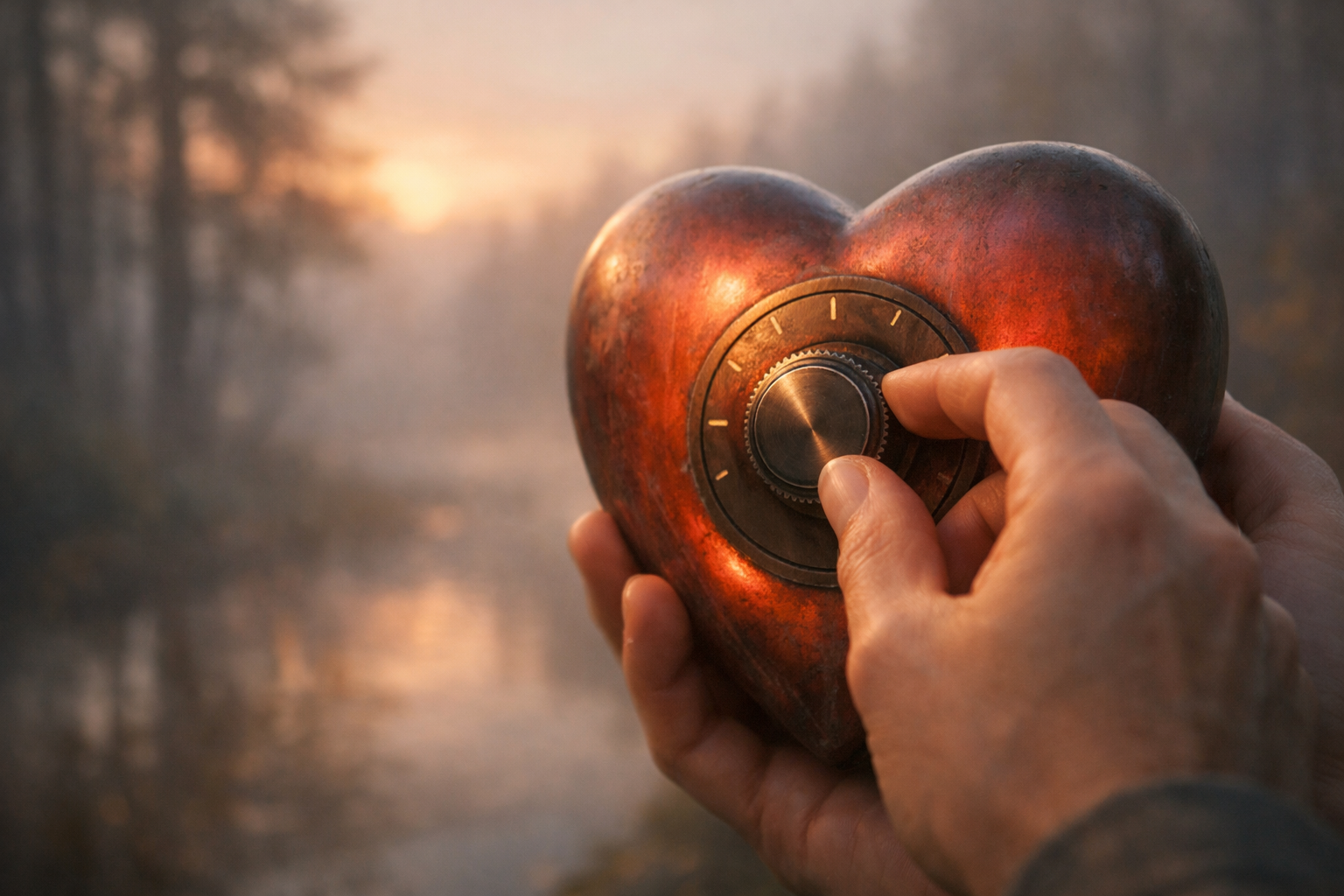
Today, I think nearly all of us understand the importance of empathy in leadership. And yet, if your experience is like mine, you may find you are not tapping into your gift of empathy as readily as you think. My relationship with empathy has evolved over the years, and today I’ll share some experiences that may help you accelerate your journey to reconnect with empathy.
Discovering My Empathy Ability
Oxford Languages defines empathy as “The ability to understand and share the feelings of another.” Volumes have been written on the subject, and I won’t dig into the nuances today – that definition is sufficient for today’s post.
Growing up, I didn’t think I had strong empathy. In the early years of my career, I looked at friends and colleagues who clearly had deep empathy. They would see a person or animal suffering, and they’d feel their pain – they were not only aware of the feelings of that other being, but they felt those feelings personally – often unavoidably so.
In 2006, while working with my first executive coach, I completed an emotional intelligence (EQ) assessment. Most EQ assessments are self-reported. You answer a series of questions rating yourself. This one was different. You watched a series of short videos and responded to questions at the end; it then rated several dimensions of your EQ based on your responses.
The results shocked me. My “Empathy Understanding” score was 95%, and my “Empathy Accuracy” score was 98%. I remember reviewing these results with my coach, and he suggested that when I think someone’s angry, I should trust my intuition, because I’m probably right.
I took away two key lessons from this exercise. First, I learned to trust my intuition more when I sensed someone’s feelings, because I was likely right more often than I thought. That awareness had a considerable impact on my leadership style and my way of being. Second, I realized that if I thought my ability to sense emotions was average, but it was actually above average, I might be taking this strength for granted and assuming others could sense emotions as easily as I could.
Empaths
I was still puzzled by the people I knew who seemed to have such strong empathy, and how they were affected by the emotions of those around them. I could sense emotions well, but I did not usually get as drawn into the emotions I sensed in others.
I’ve since realized that these are likely empaths. Empaths not only sense others’ feelings but also tend to experience those emotions deeply themselves. Many empaths have to learn to regulate these experiences to protect themselves from emotional burnout.
At the time, I considered my ability to regulate my empathy and avoid being drawn into others’ emotions a great strength. I could understand others’ feelings and show up as a caring, compassionate leader as a result, yet not get drawn in too deeply by their emotional state.
A recent experience has challenged that perspective.
Cities of Gold
I recently began reading Cities of Gold by Douglas Preston, based on a Santa Fe local’s recommendation. Published in 1999, the book is a memoir by the author. He and two others retraced Coronado’s route from the US-Mexico border in Arizona to Santa Fe. He wanted to experience the journey as authentically as possible, so they rode on horseback. It serves as a fascinating memoir while also sharing historical accounts of Coronado’s journey. The person who recommended it had read it three times, and it has a 4.3 rating on Goodreads, so I looked forward to reading it.
It was entertaining and well written, but as I read, I grew increasingly uncomfortable. This party of three humans and six horses navigated challenging terrain, encountering several brushes with death. The author considered stopping several times, but “bravely” continued, as did his partners.
By page 95, I abandoned the book. They had reached the town of Benson, and the horses were incredibly spooked walking through an actual town. As they passed under an interstate overpass, one horse was so spooked it wound up on the off-ramp, facing down a car.
I was outraged. These three humans could decide for themselves whether they wanted to continue or not, but they were quite literally torturing these horses. I was unwilling to read another word, knowing the author would continue his journey for another 400 miles.
I found myself unable, or at least unwilling, to turn the dial down on my empathy for those horses. In so doing, I recognized that my “gift” for turning down the empathy volume comes at a price. If I’ve turned the dial down too far, I’m turning down my intuition and am less able to connect with and support those around me.
I believe my life experiences over the past four years have gradually led me to turn that dial up, allowing my own system to more fully experience the emotions of those around me. And I’m convinced that’s a good thing.
Restoring Empathy
Most of us are gifted with an innate capacity for empathy. We may have grown up in an environment that fostered and strengthened that gift, or we may have been encouraged to turn the dial down. I was fortunate to be raised in an environment that valued empathy and helped me build the ability.
At the same time, I can see now in hindsight that the corporate world, and my view of what it meant to be a successful leader in that world, led me to turn that dial down gradually. I didn’t stop sensing others’ emotions, but I did limit my own experience of them.
I suspect my experience is true for many leaders. We invest in developing our emotional intelligence, but, consciously or unconsciously, we also protect ourselves from being drawn into others’ emotions, limiting our ability to empathize. It may be our own conscious choice to do so to regulate our nervous systems, or we may work or live in an environment that discourages empathy.
If I could turn back time and repeat my leadership journey, I’d turn up the dial on empathy. I wouldn’t turn it all the way up to 11, but at least to 7. There’s no doubt in my mind that the world would be a better place if we could all turn our empathy dials up a little.
Putting It Into Practice
What is your relationship with empathy? When you sense someone else’s emotions, do you take the time to validate what your intuition is telling you? If their emotions begin to impact your own emotional state, do you let those emotions through, or do you shut them out?
Consider turning your empathy dial up just one notch, and see how it changes your relationships with those around you.
I am an executive coach and life coach with software executive roots in higher education and EdTech. I coach because I love helping others accelerate their growth as leaders and humans. I frequently write about #management, #leadership, #coaching, #neuroscience, and #arete.
If you would like to learn more, schedule time with me.