

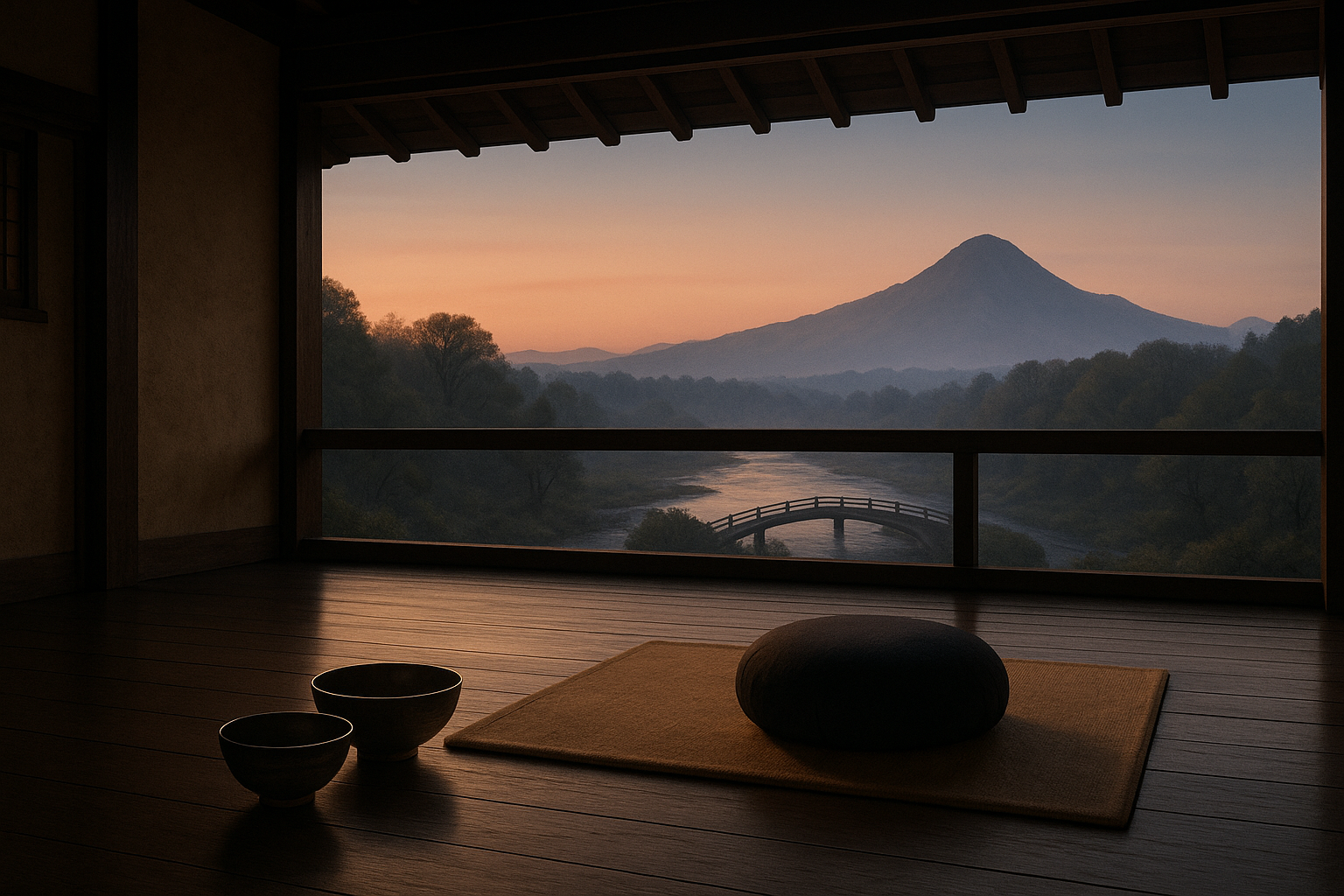
I spent the first week of December in silent meditation at Upaya Zen Center. This was my first in-person meditation retreat, and I was not sure what to expect. In short, I can authentically say it was the best week of my life.
Many of my friends and clients have been eager to hear how it went, so today I’ll share some of my experiences.
The Format
The format felt intense, but I’m told it’s much more relaxed than at most Zen centers. Roshi Joan Halifax consciously crafted a practice that takes overall well-being to heart. I arrived Monday afternoon, and we spent the evening preparing, learning the basics, and sharing a social dinner before we began our silent practices.
Tuesday through Sunday followed a consistent schedule. Each day began at 6 AM and continued until 9 PM. We had about 8 hours of practice each day, which was largely zazen (sitting meditation), with brief periods of zinhin (walking meditation) interspersed, along with some ceremonies, chanting, and about 30 minutes of Dharma talks. We spent an hour doing samu (service), and three oryoki meals, leaving about 4 hours of rest throughout the day.
In addition to maintaining silence (aside from the chanting and interviews with teachers and Roshi Joan), we were asked to avoid eye contact with others at all times, honoring their silence and our own—no cell phones, no laptops, in fact, no reading or writing of any kind. There was a nature trail outside my room, and I walked it twice a day after breakfast and lunch. Because of the format, even when we were not in formal practice, I often found myself meditating.
Unplugging
I realize that to most people, this sounds like a very boring week. I was never bored. I did not have an awakening or major flashes of insight, but I found my time deeply peaceful and serene. By the fourth day, I realized I didn’t want the week to end. There was a remarkable peace to setting aside my identity completely and sitting, fully present in the moment. I imagine this was helped by knowing it was only for seven days. It would have felt different if I didn’t know how long it would be before I would return to “normal” life.
It’s very hard to do this experience justice. Often, we view a vacation as an opportunity to unplug from work, to recharge our batteries. This experience takes that to another dimension.
Going on vacation and truly unplugging from work is like spring-cleaning at home. You remove all the clutter and get things organized. You move the furniture around to clean behind and underneath it. You are left with a remarkably clean home, feeling refreshed and revitalized.
In contrast, this retreat would be boxing up all your possessions – your books, your dishes, your artwork, and removing them from your home. Removing all the furniture, so the house is entirely empty, then giving it a thorough, deep cleaning. When you are done, you don’t just move everything back in and unpack it the way it was. You thoughtfully consider what is worth bringing back, and what no longer needs to be in your home at all.
Emerging from retreat left me with an empty home, and I found myself questioning what I wanted to put back into the house and what I wanted to leave out. I’ll have more to say on this in the future.
Oryoki
All our meals were oryoki. We had a set of three nested eating bowls and utensils, and followed an elaborate process to prepare, eat, and clean up.
On the first evening, we received instruction in the oryoki process, and I was overwhelmed by the sheer number of steps. Bowing together multiple times to begin. Servers bring out tray tables for those sitting in chairs, again with synchronized bowing. Collectively opening our bowls and setting our place (three nested eating bowls, a napkin for your lap, a napkin for wiping your bowls, a spoon, chopsticks, a small spatula, and a large napkin that serves as your placemat, all carefully wrapped together and tied inside that placemat napkin). Servers coming around, filling each bowl, serving us in pairs, with hand gestures for when you have enough, or want a little more. Once everyone had been served, we chanted and bowed in gratitude for the food. Eating once the senseis have taken their first bite. Cleaning our utensils and our bowls in a specific sequence with tea. Wrapping everything back up again.
I found the initial instruction overwhelming, and thought the whole process was too structured and over the top. But after a few meals, my attitude transformed. I could see the beauty of the rituals. Tremendous efficiency that came from everyone knowing the process and following it, as servers seemed to dance across the temple floor.
By the fifth meal, I looked across the temple and softened my gaze, taking in the experience of the serving, and I felt we were eating as one. We were not 70 individuals. We were each cells in a single, collective organism. It brought tears to my eyes. Oryoki meals became one of my favorite parts of the week.
As I returned to my room and looked at my simple morning and evening routines – taking pills, brushing, flossing, shaving, etc., I saw an opportunity to bring ritual in. I put some simple structure around the processes that both deepened my presence in those simple acts and gave me visual cues that no step had been skipped.
Oryoki means “just enough.” I knew I was eating less food than usual, yet my body felt completely nourished. I did not feel hungry at any point during the week. I had no cravings for meat or sweets. The vegan, gluten-free meals were among the most delicious I’ve ever had. When I returned home, I weighed seven pounds less than I did before the retreat started.
Message Received
I did not have any spectacular moments of awakening. However, I did receive a clear message in meditation early in the week.
I imagined a river that represents taking the first step towards spiritual growth. On the right bank of the river, there are many beings who have taken at least that first step. It could be a meditation practice. It could be any number of organized religions. It could be spending time in nature as a sacred practice, not just for entertainment.
On the left bank of the river are those beings who have not taken their first step. The message I received was that my role, at this moment in time, is to help as many people on that left bank as possible find their bridge across the river and the courage to cross it. If every being on the planet could find a path that resonates with them and take the first step on their path, this would be an amazing world.
To that end, I make an offer. If you would like a thought partner to explore your first step (or second, or any), I’m happy to spend an hour with you. I want to be clear, this is not a pitch to get more clients. My business is healthy. This is a genuine, open invitation to anyone interested in exploring. If you’re curious, please schedule time with me.
I am an executive coach and life coach with software executive roots in higher education and EdTech. I coach because I love helping others accelerate their growth as leaders and humans. I frequently write about #management, #leadership, #coaching, #neuroscience, and #arete.
If you would like to learn more, schedule time with me.