

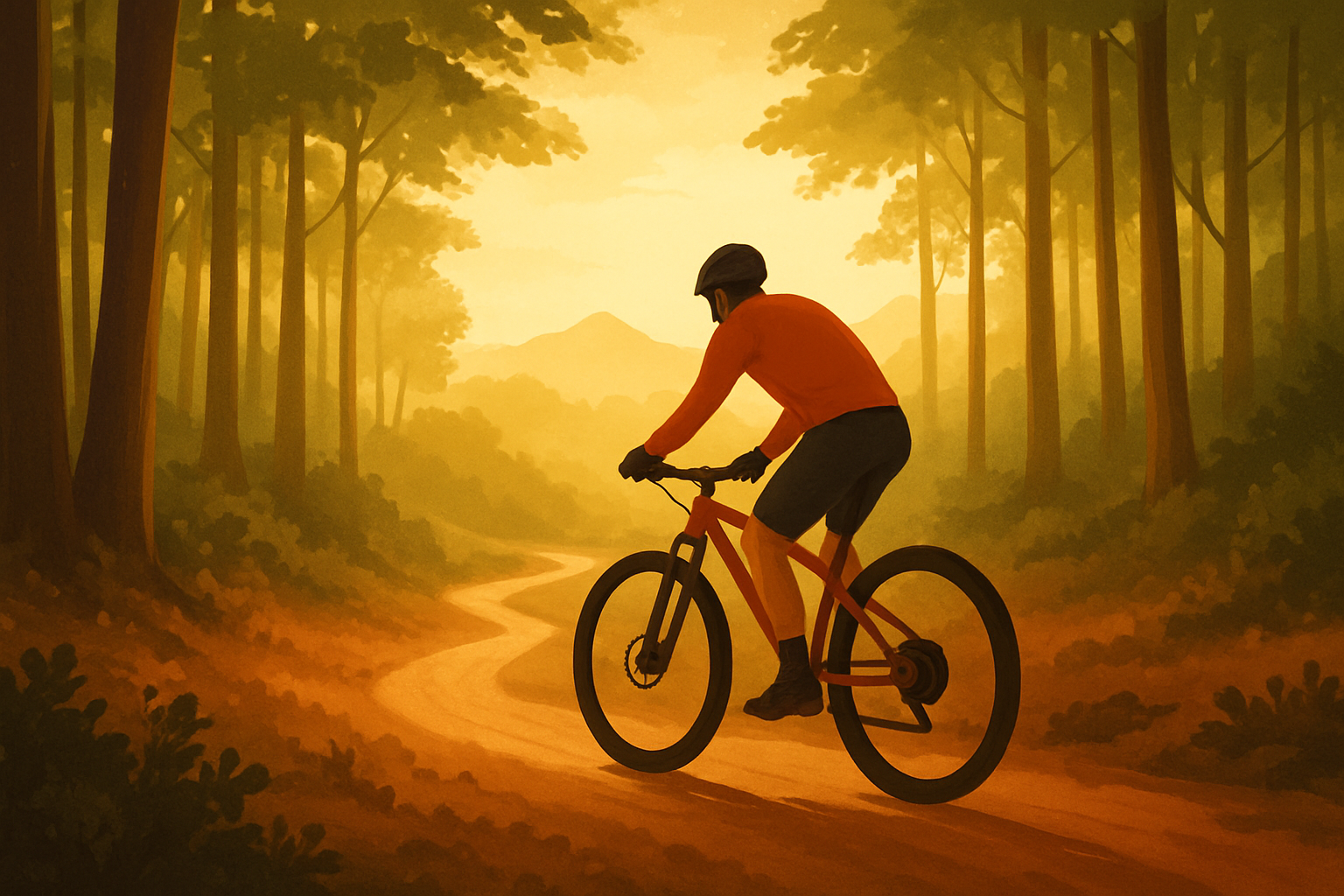
Soon after I arrived in Santa Fe, I met a lovely couple in the Historic Town of Lamy named Kris and Pat. They are runners and had recently purchased mountain bikes. They were incredibly enthusiastic and encouraged me to get one, highly recommending a particular store and salesperson to work with.
Mountain biking was one of about a dozen activities on my Want To Do list, but like the rest of them, the barrier to entry was high enough that I probably wasn’t going to get started. Suddenly, I had a clear path forward – I knew where to go, who to talk to, and I had new friends happy to show me the ropes. The Universe had spoken, and I made the investment. I’m pleased to report the Lamy Mountain Biking Club is in full swing and convenes more weekends than not.
I am incredibly grateful to Kris and Pat for helping me get over those hurdles and for the friendship that is forming.
The process of becoming a mountain biker has also broadened my awareness as I see different perspectives.
The First Perspective
I have a good friend who is a hardcore mountain biker. His love of mountain biking has put him in the hospital at least once. I’ll confess I didn’t talk to him in advance about my decision to get one. I’m sure he would have had excellent advice for me, but that would probably have complicated my purchasing decision. I chose to remain ignorant of his wisdom and just go with the salesperson’s guidance.
When I sent him a picture of me on my new bike, I breathed a sigh of relief when he told me I had picked a great first bike. He then offered some quick advice.
“Remove that reflector on the front of your bike.”
I was pretty sure I knew why he said this, but I asked anyway.
“Why do I need to remove the reflectors?”
“Because it screams ‘I’m a noob who just bought a new bike.’ Take notice – you’ll never see reflectors on people’s mountain bikes.”
His advice holds – I haven’t seen reflectors on any mountain bikes since this conversation.
My initial reaction was to leave the reflectors on to assert my unattachment to how others view me. I eventually caved, realizing if I were to ride in the dark, I’d want actual lights. And yet, by removing the reflectors, I was, in some sense, putting on a mask. In fact, I was a noob with a brand new bike. The reflectors would authentically communicate that to others I encountered on the trail, just like we put “Student Driver” stickers on the back of our car so people know to take caution.
I’ve had a few instances of passing bikers coming the other way on a trail where I would have appreciated a wider berth. Perhaps I looked like someone who knew what they were doing.
The experience was a reminder of the masks we put on, intentionally or unintentionally. As my life unfolds, I find myself less and less willing to wear a mask. I want to be my authentic, transparent, vulnerable self.
The Second Perspective
When I told my father I had purchased a mountain bike, he let out an audible groan.
“Oh no!”
“What’s the matter, Dad?”
“I HATE mountain bikers!”
I was taken aback. For a moment, I felt like my identity as Josh, the Son, was swept away and replaced with Josh, the Mountain Biker. I realized in that moment that when I get on my bike, others place a mask on me unconsciously. I thought of all the times in the past when I was hiking or trail running and may have been annoyed at the mountain bikers.
I wanted to get a bumper sticker for my bike that said “My other bike is a pair of trail running shoes” and an “I 💙 Hikers” t-shirt to counteract this perspective.
It also gave me a new perspective as someone who hikes, runs, and rides on trails. Now, as a hiker, I stop to remove a large out-of-place rock from the middle of the trail, recognizing the danger it represents to a biker.
This is admittedly a relatively trivial example. But it serves as a potent reminder of how easily we can take one piece of information and impose a whole set of biases based on that data point.
Just as I seek to be authentic, vulnerable, and transparent with others, so too will I seek to look through these self-imposed masks, opening myself up to see their authentic, vulnerable, and transparent selves.
The Neuroscience of Mountain Biking
I have written before about one of my favorite neuroscience insights – the Task Positive Network (TPN) and the Default Mode Network (DMN). Borrowing the metaphor from my teachers Ann Betz and Ursula Pottinga, CPCC, PCC, MNTC, these are our Engineers (TPN) and our Wizards (DMN).
Our Engineers are active when we are focused intently on a task. They are great for getting things done. Our Wizards are active when our mind is wandering, imagining the future, ruminating on the past, seeing the big picture, and seeing others’ perspectives. In a neurotypical individual, these networks inhibit each other. When one activates, the other shuts down. This is why beginning meditation often focuses on the breath. When our “monkey mind” is running wild with thoughts, our Wizards are active. When we focus intently on our breath, counting them, paying attention to the sensation of the air moving in and out of our nose, we are engaging our Engineers and deactivating the Wizards.
The magic for me was learning how running was a natural activity to activate my Wizards. I often take a moment to intentionally give my Wizards a topic before I start my run, and then, as Ann and Ursula say, I “Put my wizards to work” on that topic as I run. This is how I craft many of my blog posts.
With this in mind, it came as quite a shock to me as I rode with my friends last week, and found my brain slipping into Wizard mode. I crafted much of this blog post as I biked the trails. That may sound like a good thing, but not to me. I still consider myself a mountain biking noob. Riding requires focus to pay attention to the terrain. My Engineers should be active, looking at the trail ahead and keeping me safe. My brain should not be wandering.
Thankfully, Kris serves as my tour guide. Each time we stop, she gives me a preview of what’s ahead and the challenges I’ll face that I may need to navigate. When tricky parts were coming, I disciplined myself to focus on the trail and keep the Engineers active. When she told me the next stretch was easy-peasy, I let my Wizards take over and thought through this blog.
Ultimately, this is what we strive for with these networks. The more we understand them, the better we get at knowing which network will serve us best in the current moment, and the easier it will be for us to shift seamlessly back and forth between them as the circumstances warrant.
Putting It Into Practice
What wisdom can we extract from mountain biking?
- Pay attention to the masks you don, intentionally or unintentionally. How can you let more of your authentic self shine through?
- Examine the masks you consciously or unconsciously place upon others. How can you set those biases aside and allow someone else’s authentic self to shine through?
- Get comfortable with your Wizards (DMN) and your Engineers (TPN). Do you need to focus on difficult terrain, or is it time to let your mind wander on an easy-peasy trail?
I am an executive coach and life coach with software executive roots in higher education and EdTech. I coach because I love to help others accelerate their growth as leaders and humans. I frequently write about #management, #leadership, #coaching, #neuroscience, and #arete.
If you would like to learn more, schedule time with me.
Want to comment? Join the conversation on LinkedIn.